

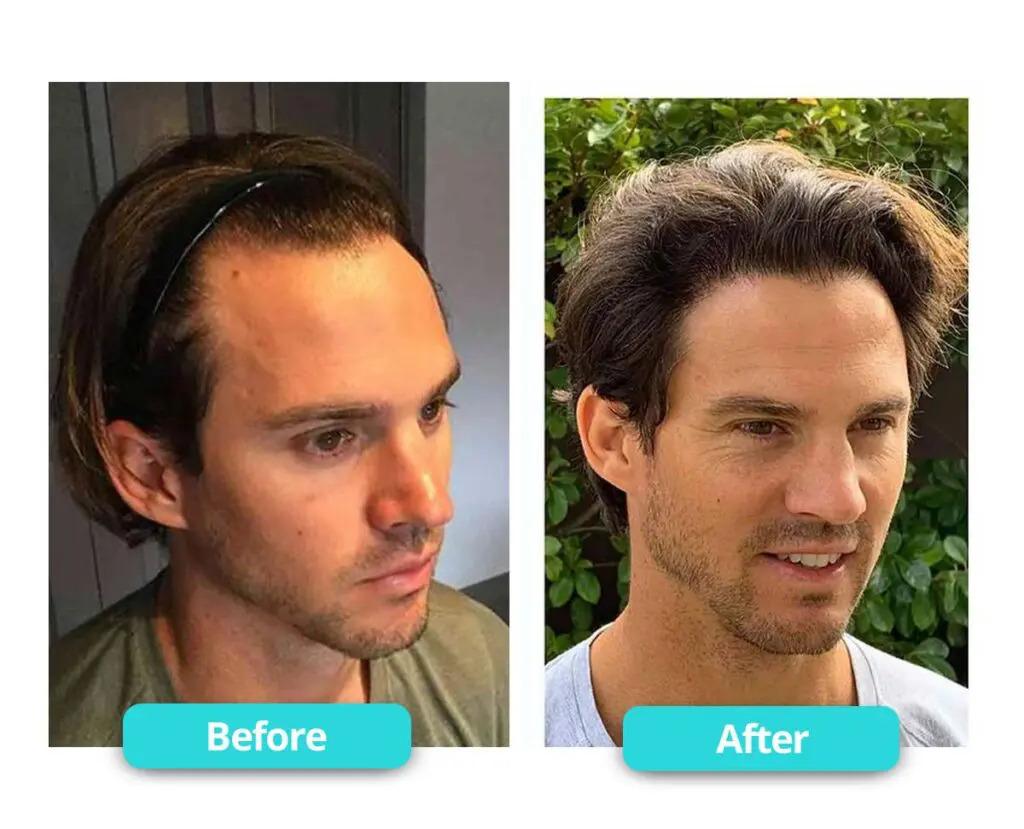
Baldness is an issue that an increasing number of individuals face regardless of their gender in the contemporary society. For all those people who want to restore their hair without going through a surgical procedure, the Platelet-Rich Plasma (PRP) therapy is considered viable and successful. This new method entails the use of the body’s self-healing mechanism to encourage hair growth and increase hair thickness in people who are experiencing initial stages of hair loss. Now, let us discuss more about how the PRP therapy is done, the advantages and the result that you are likely to get from this treatment.
Understanding PRP Therapy
Platelet-Rich Plasma (PRP) therapy incorporates healable values of platelets and expansion factors drag out from your bloodstream. Platelets are one of the minor blood particle that has a function of clotting or participation in the healing of a wound. They also consist of proteins known as the growth factors involved in the healing and regeneration of tissues. Usually, in PRP therapy for hair restoration, these platelets and growth factors are combined from the individual’s blood and then the mixture is injected into the scalp.
The PRP Therapy Process
- Consultation and Assessment – To start with, anyone who intends to undergo PRP therapy for hair loss has to consult a dermatologist or an efficient hair specialist. The information gathering of your medical history, current medication, and what you anticipate from the treatment will be done during this consultation. Your provider will also evaluate the level of baldness and find out whether the patient is fit for this treatment.

- Blood Collection – Once you decide that you want to proceed with the PRP therapy, a small amount of blood will be taken from the arm in the same way as during a usual blood donation. It is then processed in the centrifuge machine such that the platelets together with the plasma is separated from the other fluids. This procedure confines the platelets and growth factors into the PRP solution as the next step.
- Preparation of PRP – The final clear solution of autologous PRP is ready after centrifugation is the prepared PRP solution. This solution contains the rich growth factor such as the platelet-derived growth factor (PDGF), vascular endothelial growth factor (VEGF), and transforming growth factor-beta (TGF-beta) that are critical in the repair of tissue and hair follicle growth.
- Injection Process – The PRP solution is then precisely administered into the areas of the scalp that is either experiencing thinning hair or balding. Lipodystrophy is treated through injections which are usually given using a fine needle, and the popularization of the ‘grid’ map of the scalp might also be used to distribute the medication equally. The aim is to wake up the sleeping hair follicles, to increase the amount of blood flow in the head area and to increase the anagen phase or the hair growth cycle.
- Post-Treatment Care – Some people may feel mild pain, swelling or redness in the area where the PRP injection was done, this should disappear shortly, within a few hours to several days. Your healthcare provider may advise you to avoid activities that may cause sweating and exposure to the sun on the scalp after the treatment as you wait for the healing process to be complete.


How PRP Therapy Promotes Hair Restoration
- Stimulation of Hair Follicles – In PRP therapy that is used to stimulate hair growth, the growth factors that are present work effectively to increase hair follicle cell differentiation and proliferation leading to growth of hair, increased hair thickness as well as density.
- Improved Blood Circulation – PRP also helps in the improvement of the supply of blood to the scalp to ensure that the necessary substances such as nutrients and oxygen supply are supplied to the hair follicles. This improved blood circulation is useful to the health of the hair follicles and influences the growth of healthy hair.
- Prolonged Anagen (Growth) Phase – With increased lifespan of hair follicles, the PRP treatment for hair loss keeps the hair stronger and healthier with lesser chance of shedding.


What Conditions can be Treated with PRP Therapy?
PRP therapy is suitable for individuals experiencing early-stage hair thinning or hair loss due to various factors, including:
- Genetics (Androgenetic Alopecia) – Androgenetic alopecia otherwise known as inherited pattern baldness is one of the causes of hair loss that is prevailing in both male and female.
- Hormonal Changes – Hormonal imbalances are other causes of hair loss they may be due to pregnancy, menopause, thyroid disease, among others.
- Stress and Lifestyle Factors – Stress, improper nutrition and unhealthy lifestyle can affect it and is one of the primary causes of hair thinning.

Number of Sessions and Results
As for the number of sessions that can be beneficial in such a treatment, it goes without saying that the number of PRP therapy sessions may differ depending on the specific situation and the exact rate of hair fall. Given the nature of work being done in the first phase, treatments are usually taken every 4-6 weeks from the start depending on the targeted area while follow-ups are taken every 6-12 months as a way of maintaining the achieved results. It has been suggested that the outcome may differ in each case; however, most clients observe changes, including hair volume and quality, from 2 to 3 months after the first treatment session.
Conclusion
PRP therapy is a safe and noninvasive way to help encourage the body to regrow lost hair and increase the thickness of the hairline. As it mobilises the body’s natural healing ability the PRP therapy activates the hair follicles, increases blood flow to the scalp and also prologues the hair’s growth phase. If you’re thinking of enlisting the services of PRP treatment for hair regrowth, it is always advisable to seek medical advice from a professional who will then advise depending with the results of the tests whether you are suitable for the therapy.
If you would like information on PRP therapy for you and to speak to us about any hair restoration options that are more suited to your needs, then please do not hesitate to contact Nepal Hair Transplant. Pamper your hair with PRP therapy and introduce yourself to a better and fuller quality hair.

